Contents
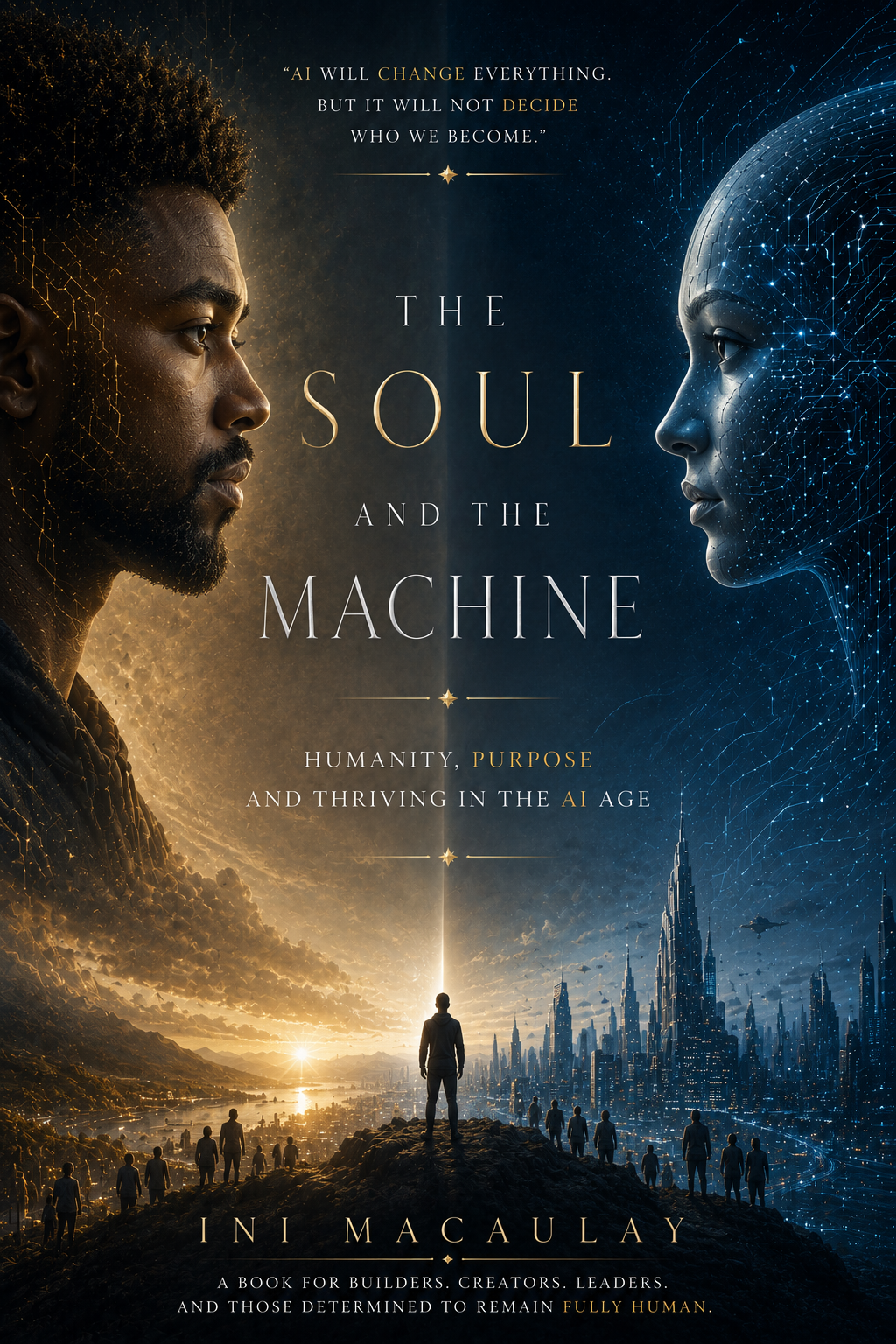
I have started to notice something that unsettles me, and I think it should unsettle you too. The tools of our era are astonishingly good at removing friction, effort, and difficulty from life, and we treat every such removal as a gift. But a fully human life is built out of exactly the things convenience keeps taking away, and I do not think we have reckoned with the trade. This is, in the end, my central conviction. The machine must serve the soul, not replace it.
The Trade We Never Agreed To
Every week something else in life gets easier. A task that took effort now takes a tap. A difficulty that shaped daily life quietly disappears. And each time, we say thank you, because ease feels like an unambiguous good. Who would argue for more difficulty?
I want to argue, not for difficulty as such, but for what difficulty was doing to us that we never noticed. Because a fully human life, the kind that produces depth, character, and meaning, is built almost entirely out of the things convenience is busy removing. Struggle. Real encounter. Responsibility. Love. Loss. Remove enough of these, in the name of ease, and you do not get a better human life. You get a flatter one. This is the trade we are making without having agreed to it, and I write about it from Port Harcourt as the conviction that sits under everything else I believe. The machine must serve the soul, not replace the very conditions the soul needs to grow.
What a Fully Human Life Actually Requires
Let me be concrete about what I mean, because the claim is only as good as its specifics. A fully human life is not an abstraction. It is made of a few hard things, and each of them is hard for a reason.
It requires struggle, because we become capable only by pushing against resistance, and a person who has never struggled has never developed. It requires real encounter, the friction of actual other people who inconvenience us, disagree with us, and cannot be edited, because that is how we are drawn out of ourselves. It requires responsibility, the weight of things that depend on us, because carrying weight is how a person matures. It requires love, which is costly and demanding and cannot be automated, because love is the deepest thing we do. And it requires loss, the hardest of all, because our depth and our compassion are forged in what we have grieved.
Notice what these have in common. Every one of them is difficult. Not incidentally difficult, but essentially so. The difficulty is not a flaw in them to be engineered away. The difficulty is where their value comes from. And that is exactly why convenience technology, aimed at removing difficulty, is quietly dangerous to them.
How Convenience Erodes Each One
Watch how it works, because it is subtle and it is happening now, one small removal at a time.
Struggle is eroded as the tools do more of the hard cognitive and practical work for us, so that we can accomplish things without developing the capacities that the accomplishing used to build. The output arrives, and the growth that used to come with producing it does not. Real encounter is eroded as mediated, curated, frictionless contact replaces the messy in-person kind, so we get the appearance of connection with the difficulty removed, and the difficulty was the part that formed us. Responsibility is eroded as systems assume more of the weight we used to carry, which feels like relief and is also a quiet thinning of the load-bearing that makes us strong.
Love is eroded most insidiously, as convenient substitutes offer the feeling of relationship without its demands, and we drift toward what is easy and away from what is costly, never noticing that we have traded the real thing for its shadow. Even our relationship with loss is being reshaped, as we build a life so cushioned and distracted that we lose the capacity to sit with grief and let it deepen us. In each case the pattern is the same. The difficulty is removed, the ease is welcomed, and something essential quietly goes with it, unmourned because we never saw it leave.
Ease Is Not the Same as Flourishing
Here is the confusion at the heart of it, and naming it clearly is half the battle. We have quietly come to believe that ease and flourishing are the same thing, that a life with less difficulty is automatically a better life. They are not the same thing at all.
Ease is the absence of difficulty. Flourishing is the fullest development of what a human being can be. Sometimes they point the same way, when the difficulty being removed was pure waste. But very often they point in opposite directions, because the difficulty being removed was the exact thing flourishing required. A life optimised entirely for ease is not optimised for flourishing. It is optimised for comfort, and comfort, past a certain point, is the enemy of depth.
You can see this everywhere once you look. The comfortable life is not the same as the meaningful life. The easy relationship is not the same as the deep one. The frictionless path is not the same as the one that makes you into someone. We know this in our clearest moments, and then a thousand small conveniences pull us, tap by tap, toward the flatter option, because in the moment ease always feels like the obvious good. The confusion of ease with flourishing is how a whole civilisation can grow more comfortable and less alive at the same time.
Why Removing Difficulty Is Not Always a Gift
I want to state the hard version of this plainly, because it runs against everything the culture assumes. The removal of difficulty is not always a gift. Sometimes it is a theft dressed as a gift.
When a difficulty was doing nothing but wasting your life, removing it is genuine progress, and I am grateful for every such removal. But when a difficulty was the very thing growing you, removing it takes something you needed and leaves you weaker while telling you that you have been served. The tragedy is that from inside the moment, the two feel identical. Both feel like relief. You cannot tell, by the feeling of ease alone, whether you have been freed from waste or robbed of growth.
This is why a fully human life now requires a kind of discernment that earlier generations did not need in the same way. They faced difficulty they could not remove. We face difficulty we can remove at will, which means we have to decide, consciously, which difficulties to keep. That decision, which no one used to have to make, has quietly become one of the most important choices of a modern life. Choose to remove all of it, and you choose a flatter existence. The gift is not the removal. The gift is the wisdom to know what to keep.
Choosing the Fuller Life
So what do you actually do, standing in a world that offers you a flatter, easier life at every turn? You choose the fuller one, deliberately, again and again, against the pull of ease.
This does not mean rejecting technology or romanticising hardship, which would be foolish. It means becoming conscious about difficulty instead of removing it by reflex. It means keeping the generative struggles, the ones that build skill and character, even when a tool offers to take them. It means protecting real encounter over frictionless contact, choosing the harder in-person thing, letting people inconvenience you because that inconvenience is where love lives. It means carrying responsibility rather than outsourcing all of it, and refusing to cushion your life so completely that nothing can reach you, including the losses that would have deepened you.
Above all it means holding onto the conviction that a human being is not here merely to be comfortable. We are here to grow, to love, to become, and to mean something, and all of that is difficult by nature. The machine is a magnificent servant when it removes the waste and leaves us free for the things that matter. It becomes a quiet thief when it removes the very difficulties that make us who we are and calls it a favour. From Port Harcourt, watching the tools grow more capable every month, I hold to this. Let the machine serve the soul. Never let it flatten the life the soul was made to live. Choose, when the flat life is on offer, the full one. It is harder. That is the whole point.